As RoHS regulations evolve from controlling heavy metals to also restricting organic substances such as brominated flame retardants and phthalates, analytical requirements have become more complex. While traditional techniques like XRF and GC-MS remain essential, Pyrolysis Gas Chromatography–Mass Spectrometry (Py-GC/MS) has emerged as a powerful tool for rapid and reliable RoHS testing, particularly for polymers and complex materials.
This article explains what Py-GC/MS is, why it is relevant for RoHS compliance, and how it is applied in RoHS testing workflows.
What is Py-GC/MS?
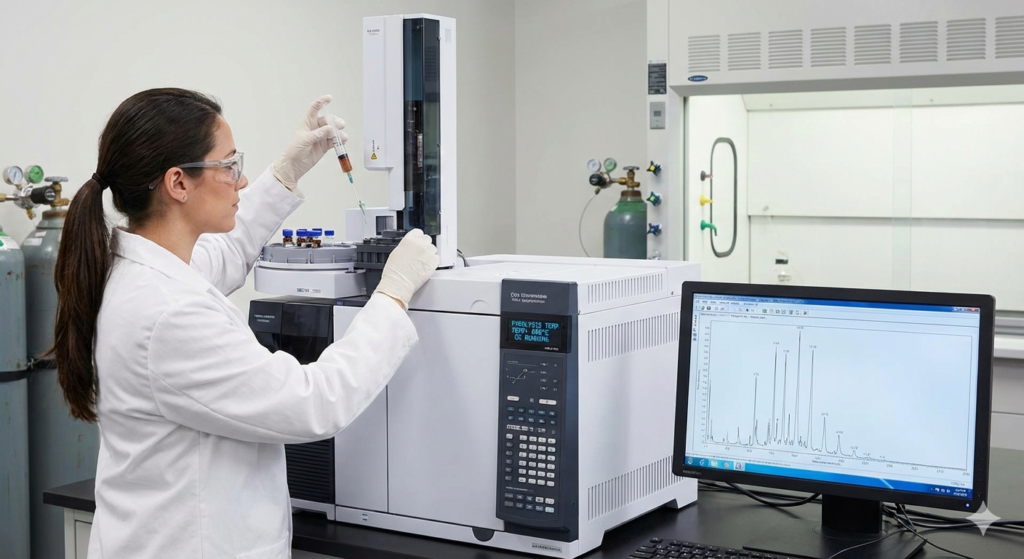
Py-GC/MS combines three techniques into a single analytical workflow used in RoHS testing:
Pyrolysis (Py) – Thermal decomposition of solid or semi-solid samples at high temperatures (typically 500–800°C) in an inert atmosphere.
Gas Chromatography (GC) – Separation of the resulting volatile pyrolysis products.
Mass Spectrometry (MS) – Identification and characterization of compounds based on their mass spectra.
Unlike conventional GC-MS, Py-GC/MS does not require solvent extraction or extensive sample preparation, making it highly suitable for solid materials used in electronics under RoHS requirements.
Why Py-GC/MS is Important for RoHS Testing
RoHS 2 (and RoHS 3 amendments) restrict not only inorganic elements but also organic hazardous substances, including:
Polybrominated Biphenyls (PBB)
Polybrominated Diphenyl Ethers (PBDE)
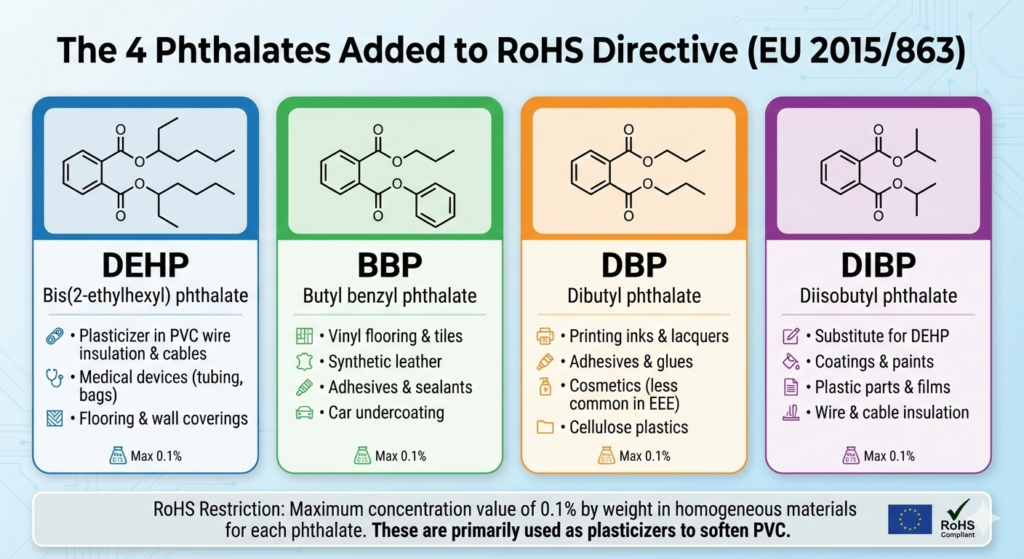
Restricted phthalates (DEHP, BBP, DBP, DIBP)
These substances are commonly found in:
Plastics and polymers
Cables and wire insulation
Connectors, housings, and enclosures
Py-GC/MS offers unique advantages when analyzing such matrices for RoHS screening.
Target RoHS Substances Detectable by Py-GC/MS
1. Brominated Flame Retardants (BFRs)
Py-GC/MS can identify characteristic pyrolysis markers of:
PBBs
PBDEs (including DecaBDE)
These compounds generate brominated aromatic fragments, allowing clear differentiation from non-brominated polymers in RoHS analysis.
2. Phthalates (RoHS 10)
Py-GC/MS enables rapid screening of RoHS-restricted phthalates:
DEHP
BBP
DBP
DIBP
This is particularly useful for materials tested under RoHS:
Effective for materials difficult to dissolve in RoHS testing
Handles multilayer or composite samples
4. Strong Qualitative Capability
Confident identification using mass spectral libraries for RoHS
Clear differentiation of polymer additives
Limitations and Considerations
While Py-GC/MS is powerful, it is important to understand its role within a RoHS testing strategy:
Primarily qualitative or semi-quantitative for RoHS substances
Quantification may require calibration with reference materials
Not suitable for inorganic elements (Pb, Cd, Hg, Cr)
Results may depend on pyrolysis conditions and temperature programs
For regulatory reporting, Py-GC/MS is often used alongside GC-MS or LC-MS for confirmatory quantification in RoHS compliance.
Typical RoHS Testing Workflow Using Py-GC/MS
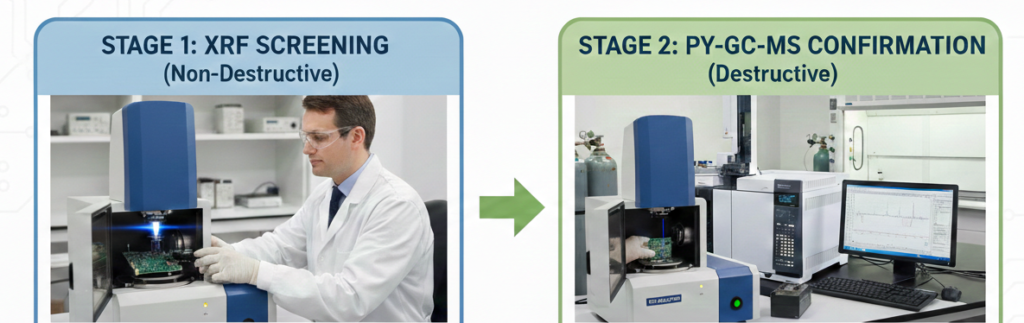
XRF screening – Identify presence of bromine or high-risk materials
Py-GC/MS analysis – Rapid identification of BFRs or phthalates
Confirmatory GC-MS / LC-MS – Quantitative analysis if required
Documentation & technical file preparation
This layered approach balances speed, cost, and compliance confidence for RoHS.
Relevant Standards and Guidelines
Py-GC/MS is commonly referenced or aligned with RoHS frameworks:
IEC 62321 (series) – Determination of certain substances in EEE
ISO 11338 – Polymer identification
Internal screening methods used by test laboratories and manufacturers
While not always specified as a standalone compliance method, Py-GC/MS is widely accepted as a screening and identification tool within RoHS frameworks.
Conclusion
Py-GC/MS is a highly effective analytical technique for screening and identifying restricted organic substances under RoHS, especially in polymer-based electronic materials. Its minimal sample preparation, fast turnaround time, and strong identification capability make it an excellent complement to XRF and traditional GC-MS methods.
For manufacturers and laboratories aiming to strengthen RoHS compliance while improving efficiency, Py-GC/MS represents a modern and practical solution in today’s analytical toolkit.