Introduction
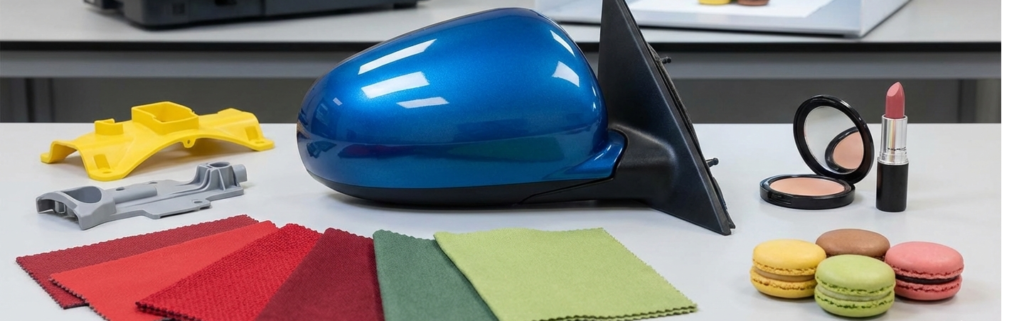
Color measurement is critical in industries like paints, plastics, textiles, coatings, and food, where consistent color impacts quality, branding, and customer satisfaction. Among color models, CIELAB (L*a*b*) is widely used because it is designed to be perceptually uniform, allowing numerical differences to correlate with visual perception. Understanding CIELAB and its associated metrics, including ΔE, is essential for accurate color control using Spectrophotometers and Colorimeters.
The CIELAB Color Space
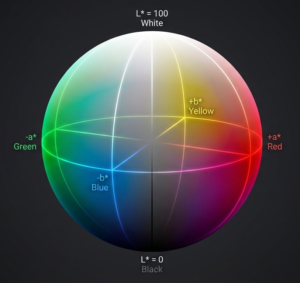
CIELAB describes color using three axes measured by a Colorimeter:
L* = Lightness (0 = black, 100 = white)
a* = Red/Green axis (negative = green, positive = red)
b* = Blue/Yellow axis (negative = blue, positive = yellow)
Why CIELAB?
Perceptual uniformity: A given numerical difference (ΔE) corresponds closely to what the human eye perceives when using a Colorimeter
Device-independent: Unlike RGB or CMYK, L*a*b* represents color consistently across instruments and materials including a Colorimeter
Versatile: Suitable for opaque, translucent, and transparent materials measured with a Colorimeter
Factors Affecting Color in CIELAB
Several factors influence the L*a*b* values and perceived color:
1. Material Properties
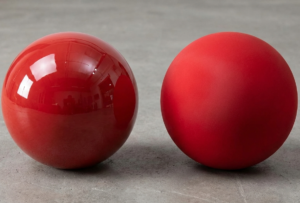
Surface texture: Glossy vs. matte affects light reflection and perceived lightness
Opacity/transparency: Transparent materials can appear lighter or darker depending on background in Colorimeter readings
Chemical composition: Pigments, dyes, and additives shift a* and b* values
2. Lighting Conditions
Illuminant: D65 (daylight), A (incandescent), C (cool daylight) affect color perception
Viewing angle: Gloss, specular reflection, or directional lighting can change the apparent color in a Colorimeter
3. Sample Preparation
Thickness: Thin films may appear lighter or shift hue
Homogeneity: Uneven pigments or coatings create variability in measurement
Cleanliness: Dust, fingerprints, or residues affect L*, a*, b* readings from a Colorimeter
4. Instrument Factors
Calibration: Using certified reference tiles ensures measurement accuracy
Aperture size: Affects measurement area and averaging of color
Instrument type: Spectrophotometers capture full spectra; a colorimeter approximates human vision
Understanding ΔE (Delta E)
ΔE quantifies the difference between two colors in the CIELAB space using a Colorimeter. It is calculated as:
Interpretation:
ΔE < 1: Color difference barely perceptible
1 < ΔE < 2: Perceptible to trained observers
2 < ΔE < 5: Noticeable difference, acceptable in some applications
ΔE > 5: Clear difference, often unacceptable
Applications:
Comparing product color to standard/reference
Controlling color variation in manufacturing batches
Setting tolerance limits for quality control
Advanced ΔE Formulas
ΔE 2000 (CIEDE2000) incorporates human visual perception factors, such as hue and chroma weighting, making it more accurate for sensitive applications evaluated by a Colorimeter
Practical Tips for CIELAB Color Measurement
Standardize lighting and viewing conditions to minimize metamerism when using a Colorimeter
Calibrate instruments regularly using certified reference tiles for accurate Colorimeter results
Prepare samples consistently in terms of thickness, texture, and cleanliness for reliable Colorimeter readings
Use ΔE thresholds appropriate for the product category and customer expectations when using a Colorimeter
Understand instrument limitations: spectrophotometers provide more precise spectral data than Colorimeters, especially for complex materials
Conclusion
CIELAB is a powerful and industry-standard color space that allows objective, reproducible measurement of color using a Colorimeter. By understanding the L*, a*, b* axes, factors that affect color, and the ΔE metric, manufacturers and quality control professionals can ensure consistent, accurate color across batches and materials.
Accurate CIELAB measurement, combined with proper sample handling and instrument calibration, transforms color control from subjective visual assessment into quantitative, scientifically grounded quality assurance using a Colorimeter.